
 English
 Portugues
 Pусский
 Français
 العربية
 Indonesia
 Melayu
 Tiếng Việt
 Filipino


tratamiento de aguas residuales de fábricas de papel
Paper mill wastewater treatment involves a combination of physical, chemical, and biological processes designed to remove solids, color, organic matter, and toxic substances before discharge or reuse. Wastewater from pulp and paper production typically contains high concentrations of suspended solids, lignin and its derivatives, residual chemicals, color, and sometimes chlorinated organic compounds. Effective treatment is essential to protect receiving waters, meet regulatory standards, and enable water recycling within the mill.The first stage is usually preliminary and primary treatment. Screening removes large debris such as wood chips, bark, and plastics. This is followed by grit removal to protect downstream equipment. Primary clarification then allows heavier solids and fibers to settle, while floatable materials are skimmed from the surface. In many mills, fiber recovery systems are installed before clarification to capture reusable fibers, improving raw material efficiency and reducing pollutant loads.Secondary treatment focuses on the removal of dissolved and colloidal organic matter, which contributes to biochemical oxygen demand (BOD) and chemical oxygen demand (COD). Biological processes are most commonly used. Activated sludge systems rely on aerobic microorganisms maintained in suspension to degrade organic pollutants. Oxygen is supplied through aeration, and biomass is separated in secondary clarifiers, with part of the sludge recycled to maintain microbial populations.Alternative biological processes include aerated lagoons, trickling filters, and sequencing batch reactors. These systems are selected based on space availability, climate, wastewater characteristics, and required effluent quality. In some modern facilities, membrane bioreactors are used to combine biological treatment with membrane filtration, producing a high-quality effluent suitable for internal reuse and reducing overall water consumption.Color removal is often a critical challenge in paper mill wastewater, especially where bleaching processes are used. Advanced treatment methods such as coagulation–flocculation, adsorption on activated carbon, and advanced oxidation processes (e.g., ozonation, Fenton reactions) are applied to reduce color and persistent organic compounds. In some cases, anaerobic treatment is used ahead of aerobic steps to break down high-strength organic loads, generate biogas, and lower operating costs.Sludge management is a significant part of the treatment system. Sludge from primary and secondary stages is thickened and dewatered using equipment such as belt presses, centrifuges, or filter presses. Dewatered sludge may be incinerated with energy recovery, co-processed in other industrial facilities, composted, or landfilled, depending on local regulations and economic considerations.Increasingly, mills are moving toward closed-loop water systems and resource recovery. Treated wastewater can be reused in non-critical process steps, reducing freshwater intake. Energy can be recovered from anaerobic digestion of high-strength streams. Ongoing research aims to improve treatment efficiency, reduce chemical consumption, and develop more sustainable, integrated solutions for paper mill wastewater management.
Producto
Categoría:
-
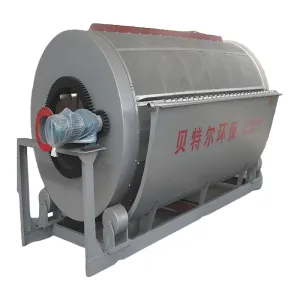
Filtro de tambor de micropantalla, equipo de filtración en sistema de tratamiento de aguas residuales
Su clasificación: Equipos de pretratamiento de aguas residualesVistas: 580Número:Tiempo de liberación: 2025-11-13 20:27:19El filtro de tambor giratorio producido por BETTER EPT se usa ampliamente en una variedad de ocasiones de separación sólido-líquido, como el tratamiento de aguas residuales residenciales, el tratamiento de aguas residuales de fábricas de papel, el tratamiento de aguas residuales de teñido de textiles, el tratamiento químico de aguas residuales, el tratamiento de aguas residuales de mataderos, etc. El vacío del medio filtrante es muy pequeño, bajo la acción de la fuerza centrífuga de la rotación de la pantalla; Las materias suspendidas se pueden interceptar con baja resistencia, separando así de manera eficiente las micropartículas suspendidas en las aguas residuales.
Noticias
Categoría:
¡Sin resultados de búsqueda!
Caso
Categoría:
¡Sin resultados de búsqueda!
Video
Categoría:
¡Sin resultados de búsqueda!
Descargar
Categoría:
¡Sin resultados de búsqueda!
Reclutamiento
Categoría:
¡Sin resultados de búsqueda!
Productos recomendados
¡Sin resultados de búsqueda!

 .



 Whatsapp
 Teléfono