
 English
 Portugues
 Pусский
 Français
 العربية
 Indonesia
 Melayu
 Tiếng Việt
 Filipino


tratamiento de aguas residuales de matadero
Slaughterhouse wastewater is a complex and highly polluted effluent that requires carefully designed treatment before discharge or reuse. It typically contains high concentrations of blood, fat, proteins, manure, urine, undigested stomach contents, and cleaning chemicals. As a result, it is characterized by very high biochemical oxygen demand (BOD) and chemical oxygen demand (COD), elevated suspended solids, oils and grease, nutrients such as nitrogen and phosphorus, and a significant load of pathogenic microorganisms. If released untreated, this wastewater can rapidly deplete dissolved oxygen in receiving waters, cause eutrophication, produce odors, and pose serious public health risks.An effective slaughterhouse wastewater treatment system usually begins with preliminary and primary treatment. Screening and coarse filtration are used to remove large solids such as offal particles, hair, and other debris. This step protects downstream equipment and reduces the organic loading. Following screening, flow equalization tanks help balance fluctuations in volume and pollutant concentration, creating more stable conditions for biological processes. Primary sedimentation or dissolved air flotation (DAF) units are then employed to separate heavier solids and floatable materials like fats, oils, and grease. In many facilities, fat traps and grease removal systems are essential components, as excessive lipids can interfere with biological treatment and clog pipelines.Secondary treatment focuses on the biological degradation of dissolved and colloidal organic matter. Aerobic processes are widely used, including activated sludge systems, sequencing batch reactors, biofilm reactors, and oxidation ditches. In these systems, microorganisms metabolize the organic compounds, converting them into carbon dioxide, water, and new biomass. Proper control of aeration, sludge age, and nutrient balance is crucial to maintain a healthy microbial population and achieve high removal efficiencies for BOD and COD. For plants with sufficient land, facultative or aerated lagoons may provide a simpler, though larger-footprint, alternative.Given the high nitrogen content, especially from proteins and blood, nitrification–denitrification is often incorporated to reduce total nitrogen. In this two-step process, ammonia is first oxidized to nitrate under aerobic conditions, then nitrate is converted to nitrogen gas under anoxic conditions. Where phosphorus levels are significant, chemical precipitation or enhanced biological phosphorus removal can be applied.Tertiary treatment and disinfection may be required to meet stringent discharge or reuse standards. Sand or membrane filtration can polish the effluent by removing residual suspended solids. Disinfection methods such as chlorination, ultraviolet irradiation, or ozonation are used to reduce pathogenic microorganisms to acceptable levels. In some cases, advanced oxidation processes or membrane bioreactors are employed to achieve very high effluent quality suitable for non-potable reuse, such as equipment washing or irrigation.Slaughterhouse wastewater treatment also generates by-products, including primary and secondary sludge and recovered fats. Sludge is commonly thickened, dewatered, and stabilized through anaerobic digestion or composting. Anaerobic digestion can produce biogas, which may be used as an energy source, improving the overall sustainability of the facility. Recovered fats can sometimes be processed for industrial uses. Through appropriate process integration and resource recovery, treatment systems can minimize environmental impact while reducing operating costs.
Producto
Categoría:
-
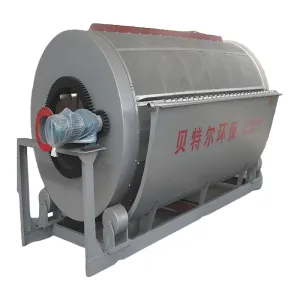
Filtro de tambor de micropantalla, equipo de filtración en sistema de tratamiento de aguas residuales
Su clasificación: Equipos de pretratamiento de aguas residualesVistas: 580Número:Tiempo de liberación: 2025-11-13 20:27:19El filtro de tambor giratorio producido por BETTER EPT se usa ampliamente en una variedad de ocasiones de separación sólido-líquido, como el tratamiento de aguas residuales residenciales, el tratamiento de aguas residuales de fábricas de papel, el tratamiento de aguas residuales de teñido de textiles, el tratamiento químico de aguas residuales, el tratamiento de aguas residuales de mataderos, etc. El vacío del medio filtrante es muy pequeño, bajo la acción de la fuerza centrífuga de la rotación de la pantalla; Las materias suspendidas se pueden interceptar con baja resistencia, separando así de manera eficiente las micropartículas suspendidas en las aguas residuales.
Noticias
Categoría:
-
[industry news]Las características de las aguas residuales de los mataderos...
2026-01-28 09:29:05
Caso
Categoría:
¡Sin resultados de búsqueda!
Video
Categoría:
¡Sin resultados de búsqueda!
Descargar
Categoría:
¡Sin resultados de búsqueda!
Reclutamiento
Categoría:
¡Sin resultados de búsqueda!
Productos recomendados
¡Sin resultados de búsqueda!

 .



 Whatsapp
 Teléfono